

Indigenous Canadians and the birth of Canada
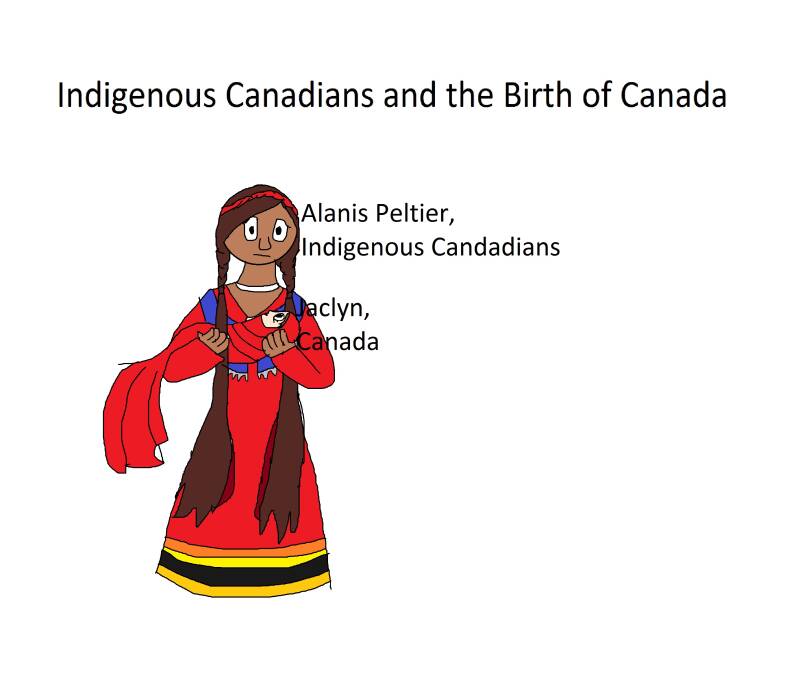
For 1,000 of years, the land where Canada’ borders are were inhabited by the Frist Nations and the Inuit people who arrived there 15,000 to 30,000 years ago via a land bridge that connected Asia to North America. As the First Nations and the Inuits were the first people in Canada, they are indigenous to Canada. These people learned to successfully live with nature. According to the Canadian constitution these peoples are divided into 3 groups:
1. First Nations (once called Indians) are the largest group. These are
the descendants of the Asian immigrants mentioned above.
2. Métis - are a race of mixed origin from French and Scottish fur
traders intermarried with Native Americans in the 1700s.
3. Inuit who lived in the Arctic (once called Eskimo)
In the 2016 census there were 1.37 million (or 4%) of the population
were natives.
While Leif Erikson had a settlement in Newfoundland, it was in the
16th century when permanent settlements in Canada by European
settlers began to emerge. When Europeans arrived in the 1500s, they depended on these people to teach them how to hunt, fish and to protect themselves from the locals. Jacques Cartier made 3 voyages across the Atlantic, claiming land for King Francis the First of France. Cartier had two captured guides, speak the word Kanata meaning village and by the 1550s the name Canada began appearing on maps.
Parts of Canada were settled by France and Great Britain. The city of
Quebec was settled by Samuel de Champlain. The indigenous and the French collaborated in the vast fur trade economy, driven by the
demands for beaver pelts in Europe. Meanwhile, Jean Talon, Bishop
Laval and Count Frontenac established a French empire in America
that stretched from the Hudson Bay to the Gulf of Mexico.
After the Battle of the Plains at Quebec City, France lost control of their American territory to Britain in 1759. At that time, Canada was known as New France and was only called Canada officially in 1791 when the Province of Quebec was divided into the colonies of Upper Canada and Lower Canada. The Habitants/ Canadiens, French speaking Catholics strove to preserve the way of life in the English speaking protestant ruled British Empire.
On 1 July 1867, the provinces of New Brunswick, Nova Scotia, Ontario and Québec were united under the Dominion of Canada with John A. Macdonald as the first Prime minister. Since then, 23 people have held that position. The Maple leaf, which had been on the coat of arms of Ontario and Quebec became part of the Canadian coat of arms in 1921 before eventually finding its way on the modern Canadian flag which was adopted in 1965.
How did all this affect the natives? Well, it is estimated that the arrival of Europeans and their accompanying diseases wiped out 90% of the native population. On the face of it Natives and settlers lived agreeably. The natives donated their land to immigrants. The government looked after their needs. Reality was quite different. Natives signed over their land at the barrel of a gun. They were confined to small reservations. Their children taken from them to be sent to public schools, where they were forbidden access to their traditional customs and languages.
Contact with their families was forbidden. The aim of this policy, which lasted over 100 years, was to exterminate native culture. In recent times evidence has emerged from these schools, many of them run by religious groups. Evidence suggests that these groups behaved inappropriately towards the indigenous children in a widespread manner. Large concealed graveyards have been uncovered on 2021. As of 1 July 2021, as many as 1,148 indigenous graves have been found on the sites of former residential schools and the number will continue to grow.
Today natives are a growing group in Canada. Most of their population is young and are assertive of their rights. They have the opportunity to dispute claims of stolen land. Most importantly they've been given the right to raise their children within their own customs and traditions.