

The Sinking of the Lusitania
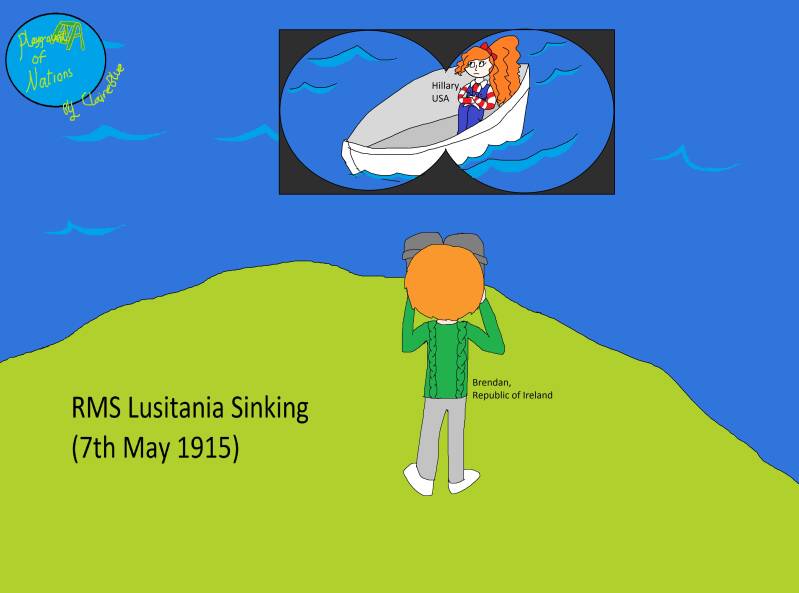
At one time the largest ship in the world, the RMS Lusitania was sailing from New York to Liverpool when it was torpedoed by a German U-Boat. While the Imperial German Embassy in Washington DC had released a warning about a war zone around Britain and Ireland, the voyage went ahead and at 14:10 on 7 May 1915, it was torpedoed in the North Atlantic Ocean and sank 18 minutes later, killing 1,198 the 1,959 passengers it was carrying with one of the victims being art collector Hugh Lane who founded the Municipal Gallery of Modern Art in Dublin, now called the Hugh Lane Gallery. The closest piece of land to where the ship sank is the Old Head of Kinsale in Ireland which is 11 miles (18 kilometres) in distance. Some of the survivors were rescued by Irish fishermen. Why did this happen? Well, the Lusitania had just so happened to be carrying war munitions for Britain that weighed about 173 tons which justified Germany's reason to attack. The Lusitania's sinking ended up being a contributing factor in the United States joining World War 1 in 1917.