

Women in the Soviet Union
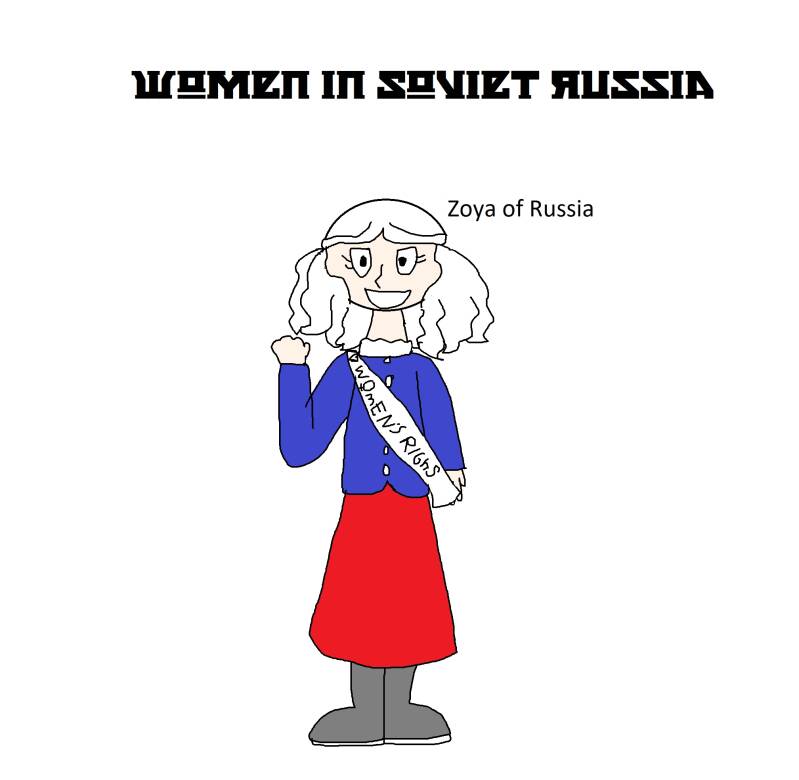
Women in the Soviet Union had more liberty and independence than before the revolution. While Soviet philosophy supported equality, this was not often in practise.
Divorce and abortion laws were liberalised under the Bolsheviks, homosexuality was decriminalised, co-habilitation between men and women was permitted. Spouses were jailed if they performed an inappropriate action against their significant other under a law that prohibited such, and abortion was legalised. Women were also given the right to vote and equal rights in government.
Despite these advances, women continue to confront discrimination and inequality in the workplace and society.
The Soviet Union’s relationship with reproductive rights, contraception and abortion was complicated. After the Bolsheviks defeated the White Army in the Russian Civil War in 1921. Soviet Union leader, Vladimir Lenin legalised abortion. However of the majority of abortions were subject to a cost. In the late 1980s, as part of Soviet leader Mikhail Gorbachev’s reforms, a push for family planning and appropriate birth control was established by largely family physicians. According to a 1991 Washington Post report, Soviet doctors indicated that couples relied mostly on the rhythm method and withdrawal for contraception.
Women were influential in Soviet politics. The Soviet Constitution made significant modifications, including granting women equal rights. Working women and peasants were granted the same right to vote as their male compatriots for the first time. They gained the ability to vote and be elected, and they were able to serve on workplace committees, village institutions and police stations.
Women were appointed to high-ranking positions in the Soviet Union in its early years. Alexandra Kollontai, for example, was designated People’s Commissar for Social Welfare in 1917.
Despite these advances, women remained under-represented at the highest echelons of government. In 1920, women made up only 3% of the Communist Party’s Central Committee.
In terms of politics, the Soviet Constitution made significant modifications, granting women equal political rights.
In the Soviet Union, women had equal access to education and healthcare. In truth, the Soviet Union was one of the first governments to give its citizens with free healthcare and education. In terms of education, the Soviet achieved tremendous advances in boosting literacy and women’s education. In 1919, the Bolsheviks launched a literacy drive, which helped raise the literacy rate among women from 24% in 1917 to 87% in 1939. Women were also encouraged to further their education and were given equal rights in government. The Soviet Union built a comprehensive healthcare system that provided free healthcare to all citizens, including women. The Soviet healthcare system prioritised women’s health, with frequent check-ups.