

Glasnost and Perestroika
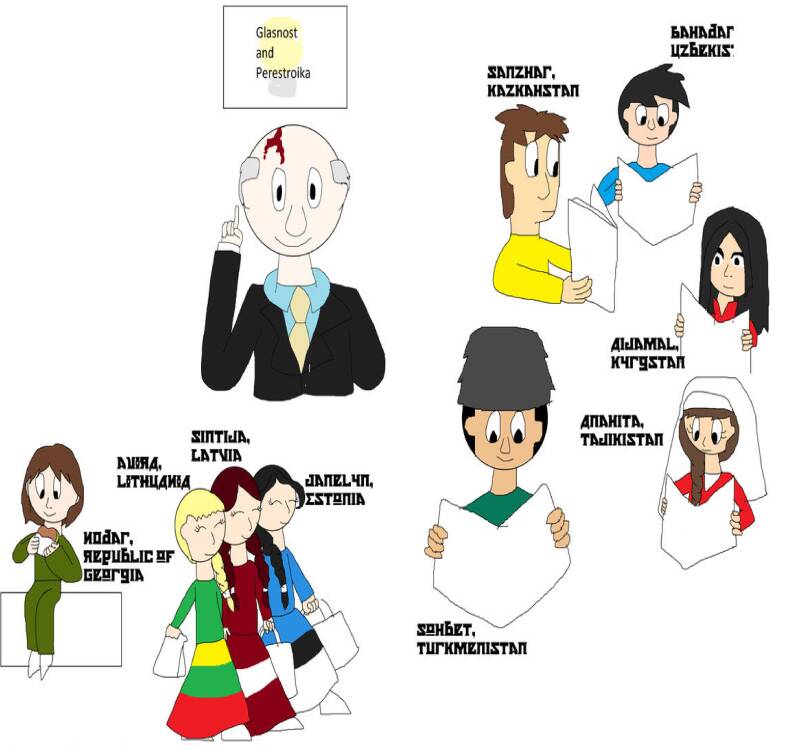
In the wake of the catastrophic 1986 Chernobyl nuclear disaster which was censored by the Soviet Union in an attempt to protect the citizens of the union, Mikhail Gorbachev (the only Soviet leader who was born after the union was formed and was known as the Marked one due to his port wine stain birthmark on his head) decided to reform the Soviet Union through two ideas called Glasnost and Perestroika.
Glasnost (openness) saw censorship relaxations and freeing of the press. Big Brother was no longer watching them. The public could now vent about the problems about the system without losing their freedom. Glasnost allowed a person to talk about their problems with the system and be given possible solutions.
Perestroika (restricting) saw the economy and the politics of the Soviet Union being reformed. At that time, the Soviet Union was spending their funds on the soldiers in Afghanistan and left the civilians in a neglected state. The supplies were worse than the post Suez Canal blockage chaos of 2021! With Perestroika, the supply chains improved and the economy was decentralised. No more standing in a long line for a loaf of bread! Perestroika also saw the westernization of the Union which meant that Levis and McDonalds opened up branches in the Soviet Union.
However, this was the spark that lit the demolition explosives that would bring down the Soviet Union. The Soviet citizens realised that they were worse off than the rest and decided to break free and restore their nation’s independence. The reforms saw the USSR not taking any action against the de-communisation in the last few months of the 1980s thus, leading to a dramatic change in political borders!