

Day of the Freedom Defenders
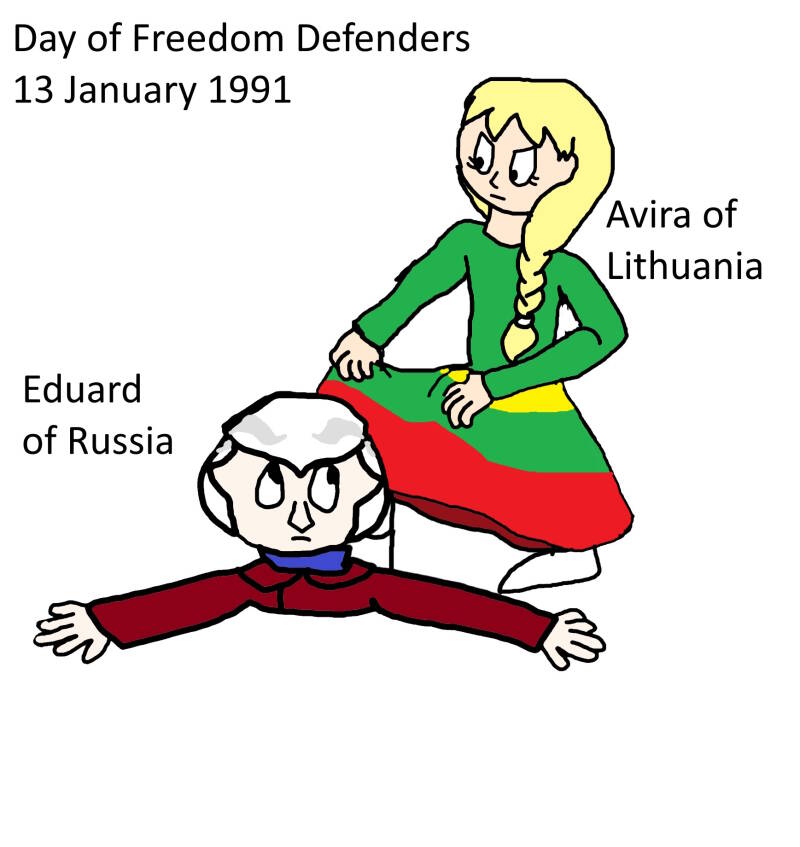
Lithuania was annexed illegally by Soviet Union in 1940, something that wasn’t recognised by Western powers. In May 1989, the Lithuanian Socialist Soviet Republic proclaimed sovereignty before taking part in the Baltic Way in August 1989 and later renaming itself as the Republic of Lithuania in March 1990. Soviet leader Mikhail Gorbachev ordered for Lithuania to return to its previous status as part of the Soviet Union. Gorbachev followed this up by sending in the army, which tried to occupy the parliament building and media centres.
At this stage, the Lithuanian people came out in large numbers to protect their independence. They occupied the main square, formed defensive rings around the parliament building, the TV centres and the printing house which published the main Lithuanian newspaper. The Soviets couldn’t enter any of these buildings without bloodshed. The Soviet army occupied the printing house but only after a number of deaths and many injuries. The next day, they attacked the TV Tower, which they captured following 14 deaths and many more injuries.
This was followed by an attack on the Lithuanian Radio and Television building. At this stage, over a hundred thousand unarmed people gathered in Independence Square, near the parliament building. This crowd was composed of not only Lithuanians but also Russians, Poles, Belarusians and Ukrainians. It became clear that any attack would involve massive bloodshed of people ranging from the elderly to very young children.
The protesters had assembled barriers ranging from building material to buses that would make it very difficult for the attackers to break through. In addition, the protesters had lit several huge bonfires in the area. The prospect for the defenders was daunting, not only were they facing the Soviet army and Soviet tanks but also the merciless cold of January in Lithuania. However, hundreds of volunteer defenders ranging from border guards to custom officers, students and volunteers took an oath at a solemn ceremony, swearing to defend the independence of Lithuania.
The attack never happened. Unlike Stalin and Brezhnev, Gorbachev was not prepared to create a blood bath. While elements of Soviet forces attempted to regain control of parts of Lithuania’s government, the attack on the parliament building and the main institutions didn’t take place. Lithuania had won a de-facto independence. It was independence not legally granted by the Soviet Union, but they had control of their own affairs. The context of what Lithuania did was that the USSR never had given back any country or land that it had occupied. The examples are Budapest in 1956, Prague in 1968. When Hungary and Czechoslovakia sought a little more freedom within the Warsaw Pact organisation, they were brutally suppressed by Russian tanks. So, what Lithuania was attempting here was very risky and very brave.
In August of 1991, a four-meter-high statue of Lenin was removed from Lukiškių Square. This was an important symbolic moment in Lthuania and this effectively ended their conflict with the Soviet Union. As it happened during the August Coup in Russia, this was evidently Russia’s difficulty, Lithuana’s opportunity. Finally, on 16 September 1991, the independence of the Baltic states was recognised.