

Hafez al-Assad
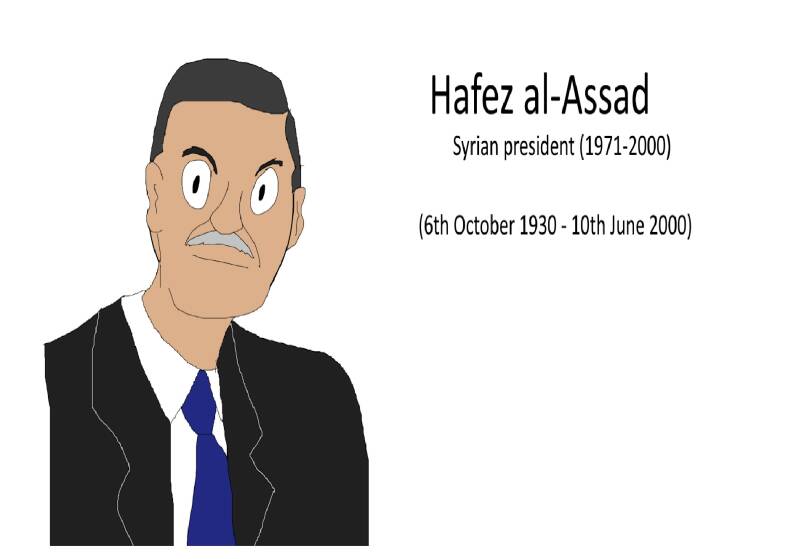
Born in 1930, Hafez al-Assad was born in Qardaha, Syria and was raised in a poor Alawite family belonging to the Kalbiyya tribe of Alawites. He was bullied by Sunnis because of his background growing up and was the first in his family to attend secondary school. He was an excellent student winning several prizes by the age of 14 and he also ended up making many Sunni friends who later became as political allies. In 1950, he joined a flying school in Aleppo. This saw him rise to become among the Syrian pilots who flew to Cairo to show Syria's commitment to Egypt. His time in the Syrian Air Force led him to become part of the socialist Ba'ath party.
In 1971, Hafez became Syrian President after a bloodless coup that saw a military takeover that very party. Just before that, he had been Prime Minister of Syria. He modernised ans industrialising Syria, strengthening not just the country's military but also its economy. Despite that, he had a dictatorial grip on the Syrian population. Mass media in the country was strictly controlled by Assad and yeah, cult of personality that saw his likeness being used on portrait's fresco's images on money as well as through statues. Hafez aimed to make his government appeared democratic even when it was anything but democratic. There were also various human rights abuses during his presidency.
He crushed many uprisings, including one by the Muslim Brotherhood against the Ba'ath Party in February 1982 via the Hama Massacre. He also avoided being assassinated in June 1980 courtesy of the muslim brotherhood's supporters. He also launched a military intervention in Lebanon during the Lebanese Civil War in 1976. When Iraq invaded Kuwait in 1990, Assad's Syria sided with Kuwait and considered the invasion a serious threat to the interests of Syria.
In the lead up to his death in June 2000, Hafez had to deal with 2 potential successors becoming ineligible for the role. The first one was his brother Rifaat Al-Assad. He was exiled after launching an attempted coup, which later failed in 1984. His second choice was as eldest son Bassel al-Assad and this choice created jealousy within the government. However, Bassel ended up being killed in a car crash in January 1984, and this left no one else but Bashar, Hafez's younger son to take over.
Hafez al-Assad died of a heart attack during a phone call with then Lebanese Prime Minister Salim al-Huss on 10 June 2000. This triggered a period of 40 days of morning in Syria, while there were 7 days of morning for him in Lebanon. He was buried in his hometown Qardaha alongside his son in what later became known as the Immortal Leader's Mausoleum. This was later vandalised when the Assad regime collapsed in late 2024 and his body was removed to an undisclosed location early the following year.