

History of Mardi Gras and Pancake Tuesday
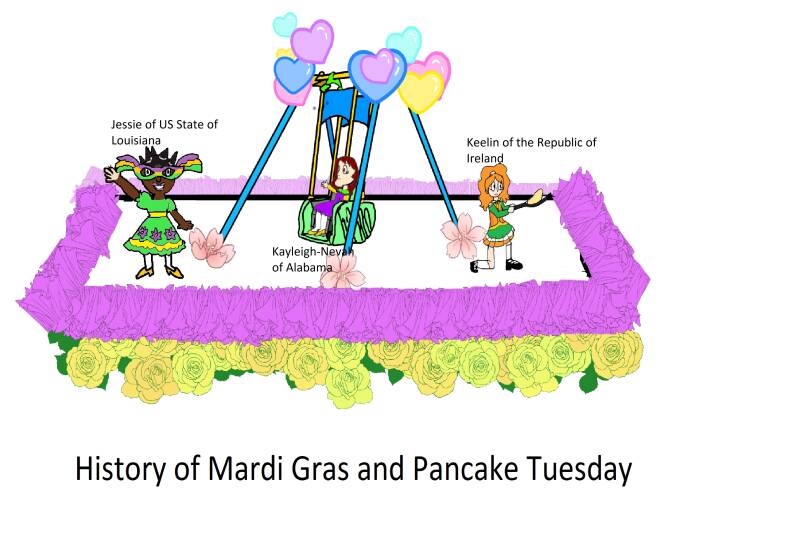
In pre-Christian times, the Romans had many festivals and celebrations for the upcoming spring season that celebrated fertility. With the arrival of Christianity in Ancient Rome, these pagan festivals were modified to start the beginning of Lent. The day before Lent’s starting point Ash Wednesday (done to fix the position of Easter) is generally known as Shrove Tuesday and that day has been traditionally Christians last chance to eat as much fatty foods and meat as much as they can before spending the next forty days abstaining from meat and turning to fasting. That’s where the word carnival comes from as the Latin phrase carnem levamen which means meat disposal while another Latin phrase carnualia means “meat-based country feast”. As for Shrove Tuesday, the word shrove is the past tense for to shrive which meant to confess in Medevial times. Depending where you are, you either celebrate Mardi Gras or Pancake Tuesday. Since they both occur on the same day, let’s look at the two of them, starting with Pancake Tuesday.
Shrove Tuesday was the last day for Anglo-Saxon Christians to use up fats and eggs for beginning the Lenten fast. The best solution they came up with to use up the eggs at the time was by making pancakes. Easy to explain, pancakes are thin, flat cakes that are made of batter and fried in a frying pan. Traditional English pancakes are very thin and are served immediately out of the pan and lemon juice or golden syrup are traditional toppings for pancakes. Four points of significance can be seen as being symbolised by the main ingredients for pancakes with eggs representing creation, flour being the staff of life, salt representing wholesomeness and milk representing purity. Many places in the UK usually have pancake races that see racers dress up in fancy dress while running down the streets of their hometowns tossing pancakes. The goal of these pancake races is to cross the finish line first while flipping a cooked pancake in a frying pan while running.
The most well-known pancake race is held in Buckinghamshire's Olney. Tradition has it that in 1445, while preparing pancakes, an Olney lady heard the shriving bell and hurried to the church while wearing an apron and holding onto her frying pan. Today, the Olney pancake race is well-known throughout the world. Local housewives are required to compete, and they must don an apron, a cap, and a scarf.
The tradtion of Pancake spread to Scotland, Wales, Ireland, Canada and Australia in the centuries that followed.
Now for Mardi Gras which also on Shrove Tuesday. It is the last day of Carnival (AKA Shrovetide, AKA Fastelan) that closes out the pre-Lenten period of the the Liturgical calendar and, of course is a time-limited last chance window to consume fatty foods, meat, sugar, eggs and alcohol before the start of fasting during Lent. The carnival period sees people wear elaborate costumes and parttake in street parties and parades. Some circus elements also happen during Carnival as well. Mardi Gras gets its name from the French words mardi which means Tuesday and gras meaning fat. Mardi Gras is the last day of these festivities and while the most notable one is in New Orléans in the US State of Lousiana, its Lousiana purchase sibling Alabama is said to have the oldest on American soil in the state’s town of Mobile. Itis said that all the balls, elaborate costumes and parades that the New Orleans Mardi Gras is known for started off there thanks to the surviving travel journals of Le Moyne D’Iberville, a French soldier and explorer (AKA coloniser) who observed a Mass that took place on Mardi Gras Day around the turn of the 18th century.
Krewes are social groups that stage parade floats and host balls. There are kings, queens, dukes, and duchesses in each krewe's "royal court." While some are more inclusive, others are only available to males or women. The all-male krewe has been staging Mardi Gras events in New Orleans since 1872 and are the ones who started the tradition of using the holiday`s famous colors: yellow, purple, and green. Another famous New Orleans krewe is called Zulu, an all-Black organization that formed when krewes in New Orleans were segregated by race. Mardi Gras Indian ‘‘tribes‘‘ were also traditionally Black organizations created as a response to segregated krewes. Over 40 tribes in New Orleans continue the tradition today. Mardi Gras is also known for the King Cake with its ring shape and yellow, green and white colouring with a small figurine inside of it which has been interpreted as the baby Jesus. Whoever receives the slice of cake with the baby inside is named king for the day—and, by some customs, is obligated to bake another cake or throw a party to keep the revelry going.
In recent times, people have been making the colourful light beads tossed at Mardi Gras out of more sustainable and biodegradable materials in an effort to combat climate change.