

Gilbert Baker
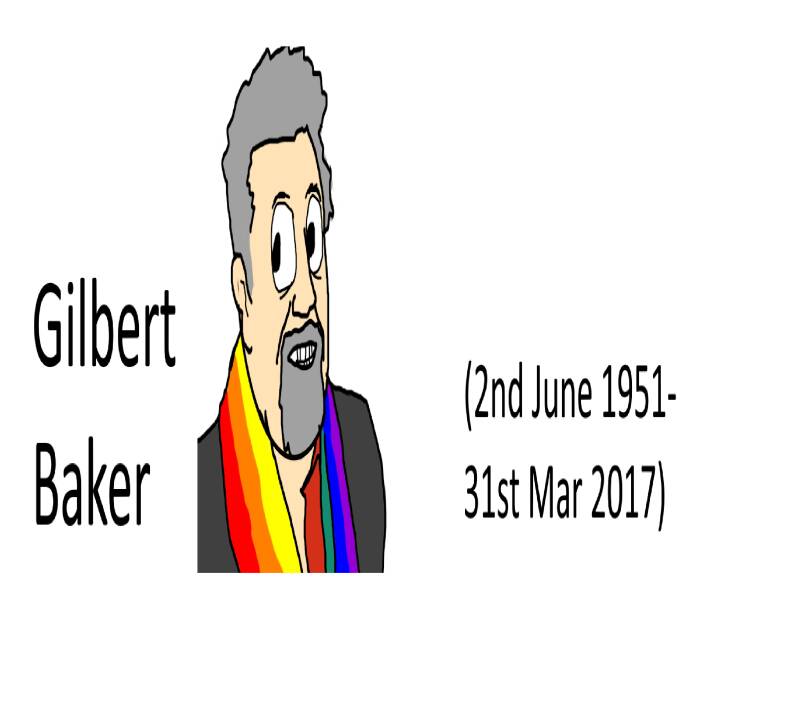
When it comes pride, one thing stands out among all the gay people, bisexual people, transgender people (including non-binary and genderfluid people), asexual people and the allies supporting them and that is the rainbow pride flag. How did a rainbow coloured flag become the symbol of gay pride?
The gay pride flag was created by a gay man from the US State of Kansas called Gilbert Baker. As a child growing up in the 1950s, he had an outgoing and friendly personality which unfortunately made him a target of ridicule and bully by the other kids and him being gay in a very religious state didn’t help at all!
While stationed in San Francisco during his time in the US Army, Gilbert first came into contact with the gay liberation movement and other gay people like him. It made him so happy that when he was honourably discharged from the army after just 2 years, he settled into San Francisco’s flourishing activist community. Gilbert took part in drag shows and joined an avodacy group whose goal was to bring awareness to sexual and gender intolerance. It was through these groups and the gay community that Gilbert came into contact with Harvey Milk who later became the first openly gay official in the US State of California. He became Harvey’s right hand man, the person who supports and helps someone the most, notably the most! Gilbert was brilliant at sewing which saw him create banners against the Vietnam War and banners that supported gay rights. Harvey Milk became one of the first politicians to stand beneath one of the first gay pride flags when they were first stitched.
The gay liberation movement and Gilbert decided that they needed a flag that proclaimed power and Gilbert gave them just that in 1978 with a rainbow flag where each stripe depicted a different positive aspect of being part of the LGBTQ+ community. The flag was first flown as part of San Francisco Gay Freedom Day Parade on 25th June 1978. Sadly, just 5 months after this glorious day, Harvey Milk was killed in November 1978 because someone didn’t like that a gay politician was in office, especially one that wanted to fight for the liberation of gay people from oppressive and anti-gay laws.
When Gilbert originally made the Gay Pride flag, there were eight stripes but due to hot pink being notoriously expensive to dye back then for commercial production, he had to remove it and then he had to remove a seventh stripe (indigo) because the flag was asymmetrical which wasn’t a good look should the flag be split in two during parades. The 6 colour Rainbow Pride flag was what the wider LGBTQ+ community needed after Harvey’s assassination. Gilbert carried on being the community’s Roy G. Biv by being an artist at Paramount Flag Company where he is credited with aiding the international attention of the rainbow flag via its mass production and the 1980s saw him become a prominent artist for many events whether they were local or national including the 1984 Democratic National Convention, despite the fact that there was a republican (read in this case, conservative) president in the White House throughout that decade who didn’t warm up to gay rights at all, not even when gay people were dying of disease they got from dirty needles or intimate love. And that republican president ended up dying in June 2004, morbid Pride blessing.
In 1994, Gilbert was paid to create a mile long (1.6km) rainbow flag that was later carried by 10,000 people in a parade to commemorate the 25th Anniversary of the Stonewall Riots in New York City. He then topped this record size flag with a 1.5 mile long rainbow flag that stretched from the Gulf of Mexico to the Atlantic Ocean in Key West, Florida for the 25th anniversary of the first rainbow pride flag. He has inspired many other people to create their own pride flags. He left us to paint the skies with rainbow colours on 31st March 2017 at the age of 65-years-old in New York City but not without leaving a brilliantly coloured legacy.