

The Mayans
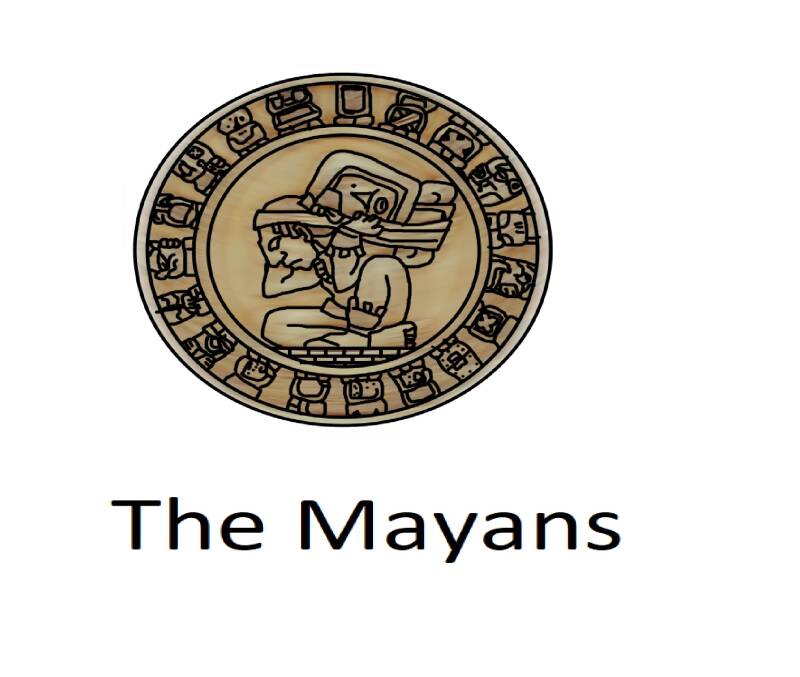
This is a drawing by Robert Scott Duncanson of Yucatan, an ancient Mayan settlement that was inhabited by the indigenous Mayans in pre Colombian times and is located in the Yucatan peninsula. While the south eastern Yucatan peninsula is where the crater made by the asteroid that killed the dinosaurs (apart from the ones that evolved into birds and your conservative local politician that hates technology) 65 million years ago is located, let's focus on the people who lived and worked in Yucatan, the Mayans.
Location:.
The central lowlands, the northern lowlands, and the southern Maya highlands were the three main areas inhabited by the Maya people. These regions included portions of what is now Chiapas and Tabasco in Mexico, Quintana Roo, Campeche, and Yucatán in the Yucatán Peninsula, as well as western Honduras, Belize, El Salvador, and Guatemala.
The history of the Mayans
About 1800 BC, the earliest Maya towns appeared in the Soconusco region, which is now a part of Chiapas, Mexico. Before this, people in Central America were nomads, but over time, they settled down and started to cultivate crops and make pottery. The Maya civilization flourished from central Mexico to Honduras, Guatemala, and northern El Salvador, and it peaked between 420 and 900 AD. The Maya civilization probably numbered at least ten million people at its height.
The Achievements made by the Mayans
Mathematics: The Maya had a highly developed number system that included the idea of zero. They counted in vigesimals, or base-20.
Architecture: The temples, pyramids, and palaces in their towns were remarkable. Tikal and Chichén Itzá are well-known examples.
There is a parody of Chichén Itzá mentioned in the Disney cartoon The Emperor's New School by the character Kronk (the man in the meme Oh yeah, it's all coming together), sugesting that he is a Mayan.
Astronomy: Maya priests meticulously crafted calendars by studying the stars and planets. They had an extremely precise calendar system. This calendar was previously misinterpreted by experts as a countdown to the end of the world but further research was later conducted to prove that the Maya calendar ending in 2012 (specifically on 21 December) was just your average turn of the era and thus was more of a celebration rather than panic stations. Think of it like New Years or for older relatives the Turn of the millénium (Y2K for this set of generations).
Writing System: The Maya recorded historical occurrences,
ceremonies, and other information using a sophisticated hieroglyphic script.
Art: Their structures were embellished with intricate carvings, pottery, and sculptures.
Trade: The wide range of artistic and architectural influences are proof that the Maya were involved in significant trade.
The abrupt decline of Mayan Civilisation
The Maya civilization started to decline in 900 AD. Although the precise causes are yet unknown, potential contributors include societal unrest, conflict, and environmental changes. The Maya were further affected by the advent of Spanish conquistadors in the fifteenth century, which resulted in the fall of numerous city-states. Maya ancestors continue to live in the same areas today, maintaining their customs and languages in spite of this decrease.