

Aboriginal Australians and the Birth of Australia
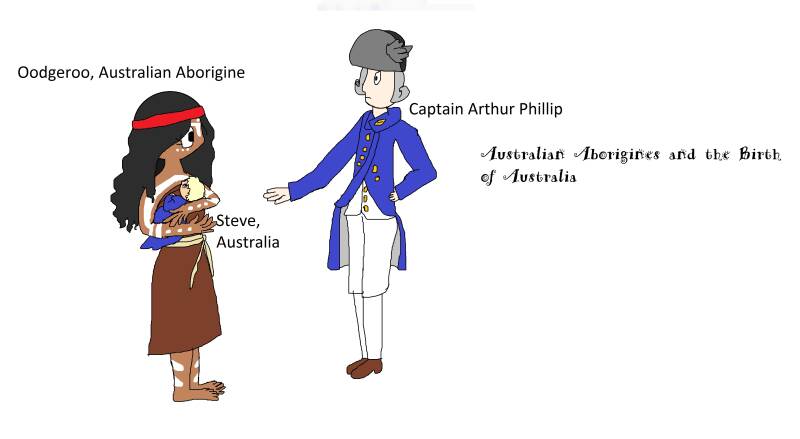
For thousands of years, Australia had been inhabited by the Aboriginal people. They have a culture that is one of the oldest in the world! They called Australia their homeland. Aborigine is a European name for Indigenous Australians. In local regions they have their own names for their people:
For example - Ananguin in Southwest and Central Australia.
• Koorie in New South Wales and some of Tasmania.
• Murrie in Queensland.
• Nunga in Southwestern and South Australia.
• Noongar in Southwest and Western Australia.
• Palawa in Tasmania.
In 1606, William Janzoon landed on Cape York's western side and chartered 300km of coastline. At that time, Europeans believed that there was a landmass in the earth's southern hemisphere they called Terra Australia Incognita (Unknown South Land). 264 years later, James Cook would land on the east coast with maps based on the Dutch's earlier exploration. Another 18 years later and a penal colony was established at Sydney Cove, Port Jackson on 26 January 1788 by Captain Arthur Phillip following America's independence. 26th January is now Australia's national holiday.
From the beginning, those indigenous to the land resisted colonialism actively but it saw brutal massacres called the Frontier Wars. The purpose for these wars was to break down the resistance of Australia's First People. These massacres went on as Australia's new residents began to build places like Sydney right up until as recent as 1960 and not even women and children were safe from being killed or separated from their families and placed with white families with new names. In 1967 the Commonwealth Parliament made laws with respect to the Aborigines which saw them being included in the national census, granting the Aborigines voting rights, citizenship, wage equality and access to social security. The Constitution Alteration (Aboriginals) Act 1967's main achievement was to raise the expectations of Aboriginal and non-Aboriginal rights and welfare. In a 2016 census, 3.3% of the population was Indigenous and 91% of these identified as Aboriginal Only 5% of the population identified as Torres Strait Islanders.