

Beginner's Guide to The Romani
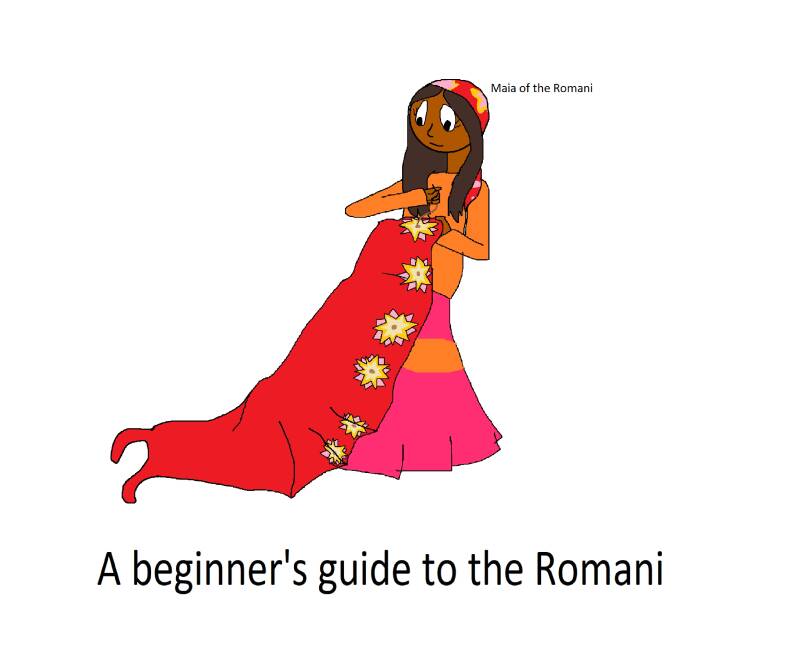
The Romani came from the Indian subcontinent and have a deep cultural, linguistic (language) and genetic roots in India which goes back to when they lived there back 10,000 years ago! They left India over 1,000 years ago due to persecution and oppression. However the Romani are not Indian. India came to be a state under colonial rule 800 years after the Romani left India so they aren't Indian as they have a unique culture and identity separate to Indians. Despite that, the Romani are still Indic people so many Romani and Indian people consider each other to be part of their Indian diaspora as well as a group that originates in India. If you see a Romani woman wear jewellery in her hair, they aren't doing it for decoration because it is the safest place to put them.
The Romani get their name from the Sanskrit word meaning a caste of performers like dancers and musicians. The Romani are in a way refugees as they are constantly fleeing an area when faced with racism and oppression. When a Romani person or a Romani family travels, they are not being free spirited nomads in a wooden wagon, they are refugees who just want to live in peace with everyone else. Sadly, they have been stereotyped not just as the aforementioned free spirited wanderers but also as thieves, fortune tellers with crystal balls and a person who could take in someone's misbehaving child. While there have been Romani fortune tellers who did it to provide for their families as that was the one of the only jobs they could have due to the discrimination they faced, the Romani still flee out of fear of persecution (not due to being free spirited) and they don’t steal kids.
The Romani have cousin groups who while have slightly different cultures and linguistics, also have origins in the Indian subcontinent. These include the Middle East & North Africa group the Domari or Dom people and the Lom people in around Turkiye and the Caucasus. When the Romani arrived in Europe during the late Middle Ages, their dark skin caused the locals to assume that they were Egyptian. In fact, this is how the Romani got their horrendous slur name, gypsy which was declared a slur by many Romani during the Cold War. For 500 years, the Romani were enslaved in around what is now modern day Romania and were subjected to abuse which in many cases resulted in Romani women becoming pregnant by white slave owners. This is how light skinned Romanis came to be.
The Romani used their own language which only a Romani knows and can teach to another Romani to plan their escape roots. Now you're probably wondering, if the Romani aren't Romanian and they aren't Indian, then why don't they want their own country? They don't want their own country even after spending all of history without their own state. The Romani legend of O Kamipen goes that when the Romani came into existence, the Lord had no more land to give them because he had given it all to those who came before the Romani. This didn't disappoint the Romani who informed him that they only want his eternal love and be accepted by him which the Lord in turn, accepted.
Like the Jews, the Romani were victims of the Holocaust. They were dehumanised, rounded up, shipped to concentration camps and exterminated. The Romani have a few names for the Holocaust like Porajmos (The Devouring), the Pharrajimos (the hard times) and the Samudaripen (meaning mass killing). At least 130,565 if not 1.5 million Romani were killed during the Holocaust. Before that, they had faced persecution under the German Empire and the Weimar Republic.
To this day, despite their cousin groups and themselves giving us things like flamenco and belly dancing, the Romani still have discrimination to this day and have been objectified as well against their wishes. The subject in Mary on a Cross by Ghost is a Romani woman who specifically requested that SHE must NOT be objectified that and her son was killed for being Romani.