

History of Montana
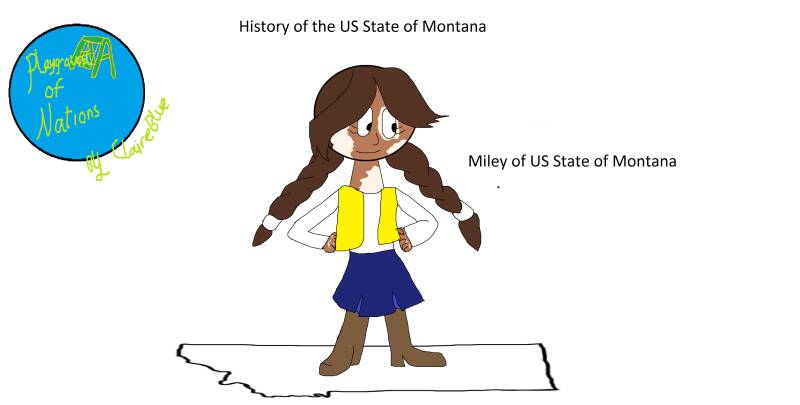
The first residents in what is now the US State of Montana were the Native American tribes of Crow (AKA Apsáalooke), Assiniboine, Cheyenne, Gros Ventre, Blackfeet and Kalispel, Salish and the Kootenai who arrived there over 12,600 years ago. Montana also has the oldest dated human burial site in North America, that of a male infant. Today, the Blackfeet, Crow and Cheyenne are the few tribes that remain on their ancestral land…sort of.
As you know, North America was considered a “New World” for European settlers and in 1805, French colonialists invaded Montana. They were said to be trappers around the late 1600s/ early 1700s who were looking for beaver fur to harvest and trade (animal cruelty and conservation was the last thing on a lot of peoples’ minds back then). Surviving written evidence regarding early Europeans in Montana were voyaguers travelling across the northern plains that became part of the Louisana Purchase, a diagonal, vertical section of North American land that stretched from what is now Lousiana to the modern day US-Canadian border. Oddly enough, Montana got their name from the Spanish, in lieu of the French. Montana is Spanish for mountainous because of the sheer amount of mountains Montana has with the numbers going up to/ surpassing 300!
Anyways, the French settlers established one of the first European settlements in Montana, St Mary’s Mission in the Bitteroot Valley. The settlers also built a sawmill and encouraged agriculture based on European methods. As the norm with colonialism, the Natives were killed, evicted from their land and their children separated from their families upon which were abused, whitewashed and converted to Christianity, in the case of the French based settlers, Catholism. In the 1860s, there was a gold rush like in California in the late 1840s and it was around this time that Montana became a territory. An interesting titbit about this territory status is that one of the territorial secretaries for Montana was Thomas Francis Meagher who had previously raised the first Irish Tricolour in Waterford, Ireland which is now the current flag of Ireland.
Montana was the location of the battle of Little Big Horn where General Custer lost against Chief Joseph and the Nez Perce tribe in 1877. Custer was also killed after this battle. Montana was connected to the advancing American railroad transport in the 1880s and in 1889, Montana became the 41st US State. Montana is one of 14 US States to border Canada, the others being, Maine, Idaho, Michigan, Washington State, North Dakota, New Hampshire, Vermont, Minnesota, Wisconsin, Ohio, Pennsylvania, New York and Alaska.