

What was the Benin Kingdom?
Benin began in the 900s when the Edo people occupied an area of what today is Southern Nigeria. Originally these were small villages with local leaders. But overtime these groups began to increase their holdings and take more territories.
By 1440 the local communities had merged into an empire. This was driven by a series of warrior rulers (or Oba) starting with Ewuare.
At this time Portuguese traders arrived in West Africa. Benin profited hugely as a base for trading of goods from the interior like palm oil, rubber, ivory and of course, slaves.
The wealth earned from this trade made Benin even more powerful. Their armies occupied even more territory moving into what today is Ghana.
During this period wealth was also reflected in beautiful and unique artwork and jewellery. Works in wood, ivory, bronze, brass and gold still exist today.
By the 1800s the kingdom had lost much of its power and territory.
The slave trade had been outlawed. The British wanted to control trade directly and had invaded much of Africa.
In 1897, a dispute between Benin soldiers and British officials led to a full invasion of Benin which toppled the kingdom.
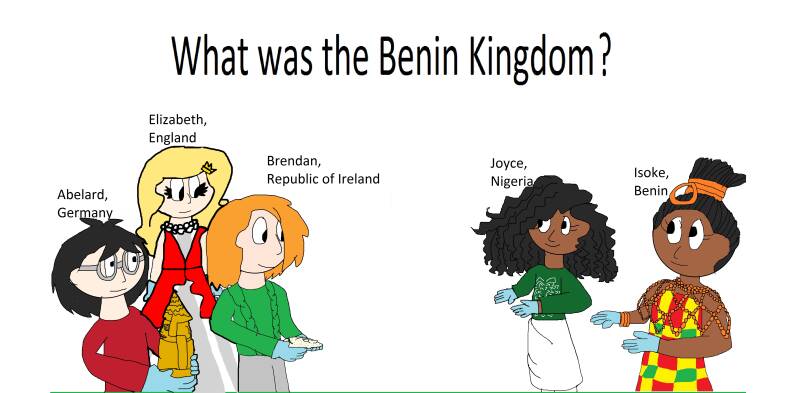
Today the memory of the Kingdom of Benin exists in glorious art and artefacts in museums and private collections in Europe and North America. The descendants of the Edo people are requesting the return of these items looted from their ancestors. Governments in Britain, Ireland and Germany are thinking about returning them.