

Ramadan
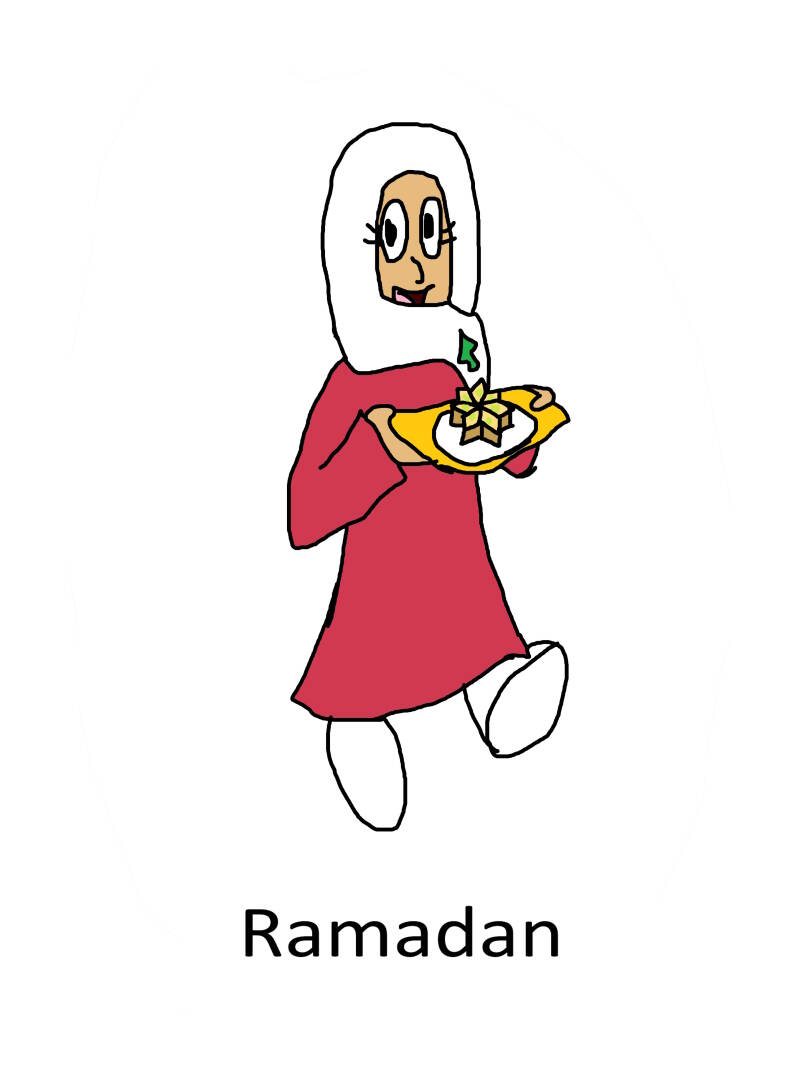
The ninth month of the Islamic calendar, Ramadan is one of the most sacred month of the year for Muslims. In Islam, God who is called Allah in Arabic revealed the first verse of the Quran to Muhammad on the Night of Power (Laylat al-Qadr in Arabic). Muhammad reportedly said during Islam's infancy that when the month of Ramadan starts, the gates of Heaven are opened and the gates of Hell are closed and the devils are chained.
Ramadan can last anywhere between 29 and 30 days though it depends on the moon sighting.
During Ramadan, Muslims fast every day from dawn to dusk as it is meant to be a time of spiritual discipline. As in deep contemplation of one's relationship with God like extra prayer, increased charity and generosity and intense study of the Quran. Fasting (Sawm) is one of the 5 Pillars of Islam with the other four being Creed (Shahadah), Prayer (Salat), Charity (Zakat) and Pilgrimage (Hajj).
Not all Muslims have to fast during Ramadam, these include:
1. Those with mental or Physical illnesses (so a Muslim with diabetes doesn't fast during Ramadan so they can control their diabetes).
2. Those who are travelling.
3. Those during menstruation.
4. Those who are breastfeeding or pregnant.
5. Those who are elderly or at old age.
6. Children who have not yet reached puberty.
During fasting, Muslims don't eat or drink but they do have a high protein meal that has to last until dawn before fasting.
Muslims pray five times a day starting with a prayer before dawn which they would wake to before going back to sleep as it is pretty early. Despite fasting and praying, the life of a Muslim isn't any way different as they still have to go to work and school though many Muslim countries will shorten their school or business hours for the day or even just shut. For praying, regardless if it’s Ramadan or not, Muslims pray facing the Kaaba in Mecca, Saudi Arabia and that direction depends where a Muslim is in the world. For Muslims in Ireland, they need to be facing south-east in order to pray in the direction of the Kaaba in Mecca.
Before the evening prayer, Muslims would have a light meal called an iftar (breakfast). Many would go to the mosque for the evening prayer followed by a special Ramadan exclusive prayer. A larger meal follows the evening prayer which is often shared with friends and family in another person's home before bedtime, just for the cycle to repeat again.
Despite the fasting, Ramadan has actually caused weight gain in Muslims due to large meals early in the morning and late at night with a long period of low activity border in on lethargy in between can wreak havoc on one's metabolism.
At the end of Ramadan, there is holiday called Eid al-Fitr where Muslims give presents, greet each other by saying Eid Mubarak (have a blessed Eid) and have a big meal. There is also a special type of charity called Zakat al-Fitr which is given at the end of Ramadan and usually in advance so those in need can also join the Eid festivities.