

History of Cinco de Mayo
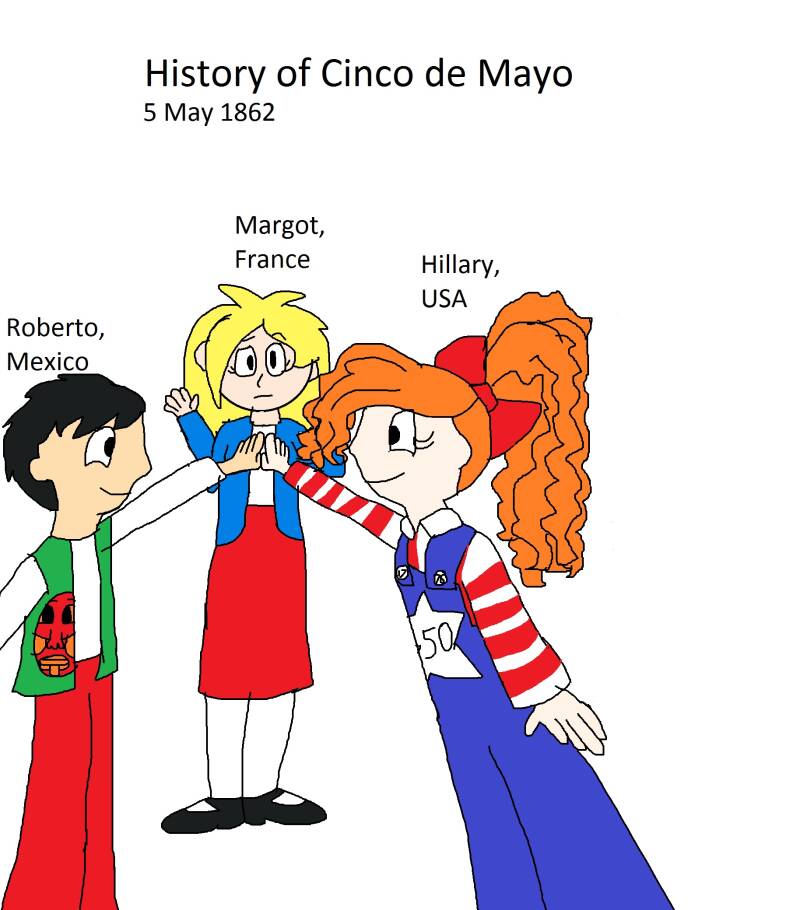
Often mistaken for Mexico's Independence Day which is on 16 September, Cinco de Mayo commemorates the anniversary of the Battle of Puebla which saw a military victory over French forces controlled by Napoleon the Third. France got involved because it wanted repayment by Mexico which had gone into debt after years of internal strife. Napoleon the Third took the opportunity to carve out Mexican territory to make an empire and in late 1861, French fleet landed at Veracruz, bringing with it, a large force of well-armed troops who drove the President of Mexico Benito Juárez (who was Mexico's first president of indigenous origin, namely Zapotec) and his government into retreat.
Led by General Latrille de Lorencez, 6,000 French troops targeted Puebla, a town in east-central Mexico where Texas-born General Ignacio Zaragoza led the vastly outnumbered and poorly supplied Mexicans and on 5 May 1862, Lorencez led an assault, kick-starting the Battle of Puebla which resulted in a victory that was symbolic to the Mexican government and help bolster the resistance movement. With help from the United States at the end of the American Civil War, France withdrew in 1867. The day of the battle became Cinco de Mayo (Spanish for Fifth of May) and although it isn't a federal holiday in Mexico, the United States, in part with Chicano activists who identified it with the victory of Indigenous Mexicans (like Juárez) over European invaders.